
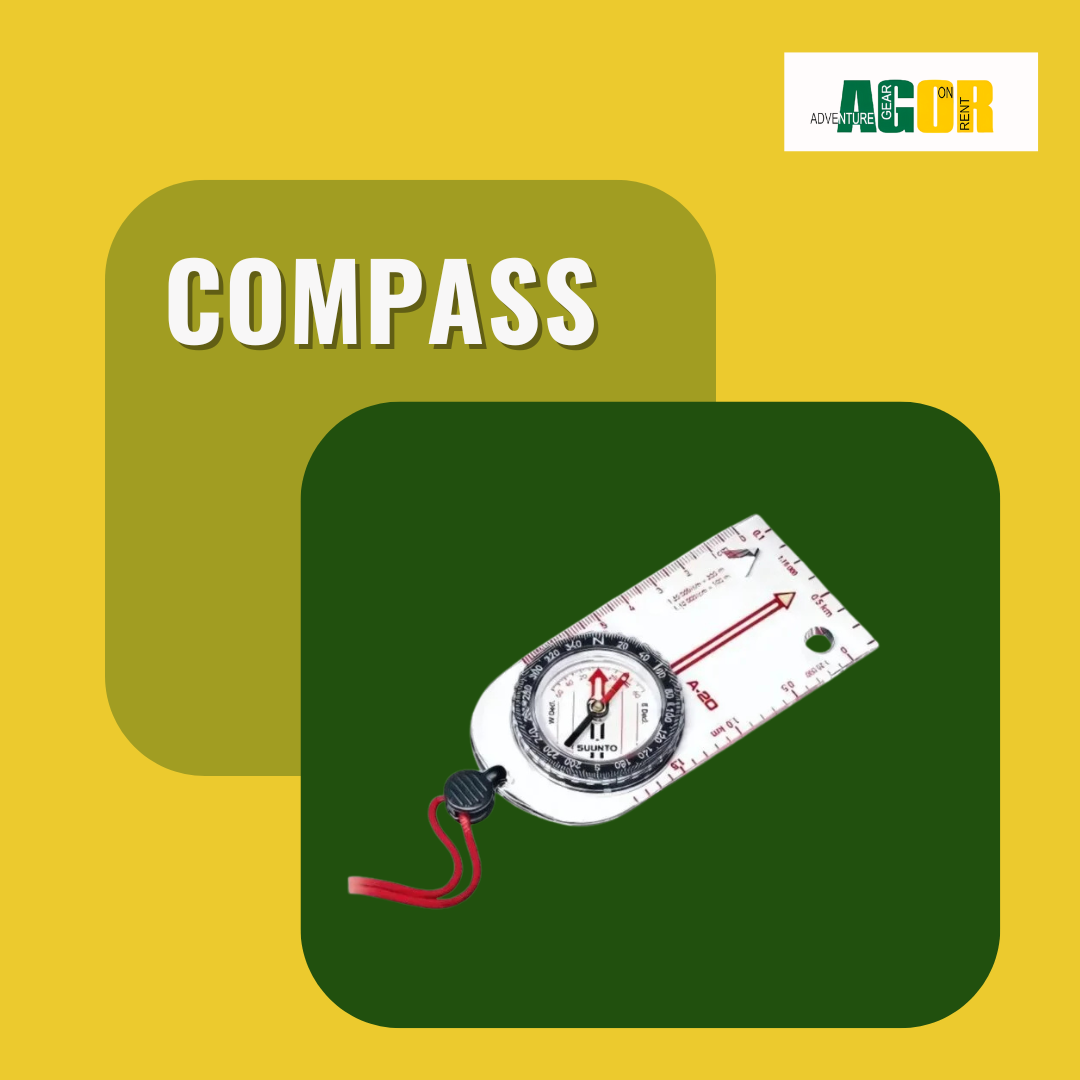
In the age of GPS devices and smartphone apps, one might think that traditional navigation tools like the compass have become obsolete. However, for serious trekkers, hikers, and outdoor enthusiasts, a compass remains one of the most reliable and indispensable tools for navigation in the wilderness. Whether you are venturing into dense forests, mountainous terrains, or remote trails, a compass ensures that you stay on course, enhancing both safety and confidence during your adventures.
At Adventure Gear On Rent, we provide high-quality trekking compasses and related navigation gear on a rental basis, making it easy for adventurers to access the right equipment without investing heavily in tools they may only use occasionally. In this blog, we explore the importance of a compass, its functionality, types, and practical applications for trekking, along with tips for choosing and using one effectively.
1. What is a Compass and How Does it Work?
A compass is a simple yet highly effective navigation tool that shows direction relative to the Earth’s magnetic poles. At its core, a compass consists of a magnetized needle that aligns itself with the Earth’s magnetic field, pointing toward the magnetic north. By combining this directional information with a map, trekkers can accurately determine their location, plan routes, and navigate unfamiliar terrain.
The basic components of a compass include:
- Magnetic Needle: The needle always points toward the magnetic north.
- Compass Housing: The transparent circular case containing the needle.
- Rotating Bezel (Azimuth Ring): Allows measurement of angles and bearings.
- Baseplate: Often includes rulers or scales for map navigation.
- Direction-of-Travel Arrow: Indicates the intended direction when navigating.
2. Why Every Trekker Needs a Compass
While GPS devices are convenient, they rely on batteries, satellite signals, and electronic systems that may fail in remote areas. A compass, on the other hand, is lightweight, durable, and reliable in any environment, making it a must-have tool for trekking. Here are several key reasons why:
A] Ensures Safety
Getting lost is one of the most common risks during trekking. A compass helps you stay oriented and follow the intended route, reducing the chances of disorientation and accidents.
B] Enhances Navigation Skills
Using a compass requires understanding maps, bearings, and terrain features. This enhances a trekker’s overall navigation and survival skills, which are invaluable in outdoor adventures.
C] Reliable in All Conditions
Unlike electronic devices, a compass functions even in extreme weather, dense forests, or areas with poor satellite reception. Whether it’s rain, fog, or snow, a compass never fails.
D] Lightweight and Portable
Modern trekking compasses are compact and can be easily carried in a backpack, pocket, or attached to gear. Renting a compass from Adventure Gear On Rent makes it convenient for trekkers who do not want to buy one.
3. Types of Compasses Used in Trekking
Understanding the different types of compasses can help you choose the right one for your trekking adventure:
A] Baseplate Compass
- Ideal for map reading and long-distance trekking.
- Features a transparent baseplate with rulers and scales for precise navigation.
- Lightweight and easy to carry.
B] Lensatic Compass
- Commonly used by military personnel and serious trekkers.
- Includes a magnifying lens for accurate reading of the needle and bearings.
- Durable and suitable for rugged terrain.
C] Thumb Compass
- Compact and mounted on the thumb for hands-free navigation.
- Often used in orienteering and adventure racing.
- Quick to use for short hikes or fast navigation tasks.
D] Digital Compass
- Electronic version that provides directional readings on a display.
- Often integrated with GPS devices, but still requires batteries.
- Useful for tech-savvy trekkers but should be backed up with a traditional compass.
4. How to Use a Compass During Trekking
While using a compass may seem simple, accurate navigation requires knowledge of techniques and practical application. Here’s a step-by-step guide:
A] Orienting the Map
- Place your map on a flat surface.
- Use the compass to align the map with magnetic north.
- This ensures that the map corresponds to the real-world direction.
B] Taking Bearings
- Identify your target point on the map.
- Place the compass edge along the line connecting your current location to the target.
- Rotate the bezel so the needle aligns with north on the compass housing.
- Follow the direction-of-travel arrow to reach your target.
C] Navigating Terrain
- Use landmarks such as mountains, rivers, or trails in conjunction with the compass.
- Check your position periodically to avoid deviation from the intended path.
- Adjust bearings as necessary when changing routes or obstacles appear.
D] Estimating Distance
- Many compasses include ruler scales to measure distances on maps.
- Combine this with map scale to estimate how far you need to travel.
5. Advantages of Renting a Compass from Adventure Gear On Rent
Not every trekker needs to purchase a compass for occasional trekking. Renting offers several advantages:
A] Cost-Effective
Renting eliminates the upfront cost of buying a high-quality compass, especially for infrequent trekkers.
B] Access to Premium Gear
We provide top-brand compasses suitable for school trips, adventure parks, or Army training exercises. You can use professional-grade equipment without purchasing it.
C] Flexibility
Whether you need a compass for a weekend trek or a month-long expedition, renting provides the flexibility to choose gear according to your trip duration.
D] Maintenance-Free
Our rented compasses are inspected, calibrated, and maintained regularly, ensuring accuracy and reliability. Trekkers can focus on the adventure rather than gear upkeep.
6. Compass vs GPS: Why Both Are Important
While GPS devices provide real-time location data, a compass offers fail-proof navigation. Combining both tools ensures maximum safety:
- GPS is convenient for tracking location and routes.
- Compass is reliable when batteries die or signals fail.
- Using both together allows cross-checking of positions for accuracy.
At Adventure Gear On Rent, we often recommend renting a compass even if you carry GPS for added security.
7. Compass Safety and Best Practices
To ensure safe and accurate navigation:
- Check for Magnetic Interference: Avoid carrying magnetic objects near the compass.
- Keep It Flat: Hold the compass level to allow the needle to rotate freely.
- Regularly Calibrate: Check for needle alignment to maintain accuracy.
- Use With Maps: Always pair the compass with a map for route verification.
- Practice Beforehand: Familiarity with compass use is crucial before heading into challenging terrains.
8. Real-Life Applications of a Compass in Trekking
A] School Adventure Trips
Educational institutions use compasses to teach students navigation, orientation, and outdoor safety. Compass-based activities encourage teamwork, problem-solving, and responsibility.
B] Army and Tactical Training
Military personnel use compasses for precise navigation in field exercises, ensuring that trainees develop spatial awareness, map-reading skills, and strategic planning.
C] Adventure Parks and Expeditions
Adventure parks incorporate compass-based challenges to simulate real-world trekking experiences, teaching visitors survival skills and practical navigation.
D] Solo or Group Treks
For solo trekkers, a compass ensures safety and confidence in unexplored areas. Group treks benefit from synchronized navigation, keeping all participants on the same path.
9. Choosing the Right Compass
When selecting a compass for trekking, consider:
- Type of Trek: Long treks need a baseplate compass; orienteering may require a thumb compass.
- Durability: Look for robust, water-resistant models for harsh conditions.
- Accuracy: Professional-grade compasses have precise bearings and needle movement.
- Ease of Use: Clear markings, rotating bezel, and lightweight design improve usability.
- Rental Availability: Renting from Adventure Gear On Rent ensures access to high-quality gear without the cost of purchase.
10. Conclusion
The compass remains an essential tool for trekkers, hikers, adventure enthusiasts, and even military personnel. It combines simplicity with reliability, ensuring safe navigation in unpredictable outdoor environments. While modern GPS technology offers convenience, a compass provides a fail-proof backup and enhances outdoor skills like map reading, problem-solving, and spatial awareness.
At Adventure Gear On Rent, we provide high-quality compasses and navigation tools on a rental basis, making it accessible for all adventurers—whether students on a school trek, Army trainees, or participants in adventure parks. Renting ensures that you always have reliable, calibrated, and professional-grade equipment without the hassle or cost of purchasing.
Investing time in learning how to use a compass can significantly improve your physical preparedness, mental focus, and overall trekking experience. So, before your next expedition, don’t forget to equip yourself with a compass—your ultimate guide in the wilderness.
Adventure Gear On Rent makes trekking safe, accessible, and enjoyable by providing premium navigation gear and outdoor equipment for rent. Gear up, navigate confidently, and explore the wild with peace of mind.
